Gibson’s theory of perception was that humans directly perceive their environment through visual stimulation. Known commonly as an ‘ecological’ theory. Gibson proposes that perception consists of the five senses – sight, smell, touch, taste and sound. When promoting a product it is important to access the five senses to ensure a reaction. Walkers Extra Crunchy crisps are in tune with the senses as the packet is different to most packets of crisps. It features a minimalist look, with a simple colour scheme - this is eye-catching as it differs from the other packets on the shelf that are more often than not brightly coloured to ensure they grasp attention from potential consumers. The texture of the packaging is different to that of a normal bag of crisps. The packaging is a lot thicker, and has a matte finish to it rather than a glossy finish to ensure the appearance of a luxury product. The product manages to target taste and sound using the packaging by using onomatopoeia in the name – ‘Crunchy’. The taste is offered in the typography used when stating the flavour and the image on the front of the packet.
Showing posts with label Year one. Show all posts
Monday, 18 February 2013
Perception research carried out in first assignment
There are a variety of views on perception according to different theorists. One theory – the Howard and Sheath model explains long-term brand preferences by looking at the reactions of an individual to a range of stimuli. The stimuli come from the social environment and are categorised into three parts: the elements of the brand, such as price; the message delivered by advertising and promotion of the product; stimuli presented by social groups. Society affects the behaviour of the consumer a great deal as society dictates trends. A hierarchy of personal needs adapted from Maslow, Motivation and Personality shows that social belonging needs ranks third. For example, if a consumer were considering what phone to purchase, they are more likely to drift toward an iPhone, BlackBerry or other smart phone, as these are the current trend in the mobile telephone market. With the packaging selected as an example, Walkers Extra Crunchy crisps are currently priced at ninety-nine pence per packet. This price is deemed reasonable considering it is a new product and one that is perceived to be a more luxurious alternative to the standard Walkers crisps. As it is a new product, Walkers use penetration pricing, they are have placed an introductory price on the packets of ninety-nine pence to gain market share. As Walkers already have forty-two per cent of the share in the British crisps market, they are already a well-known and popular brand. However, this is a new product and a consumer would prefer to purchase the more luxurious looking Walkers crisps instead of the standard Walkers crisps if they are the same price. If the Walkers Extra Crunchy crisps prove to be a success then they can increase the price. As far as promotion goes, Walkers have famous ex-sportsman Gary Lineker as the face of the brand and have introduced Lionel Richie into the promotions. They have now automatically targeted two major markets – the sports fans and the music fans. The message being delivered in this series of advertisements is that Gary Lineker and Lionel Richie consume this product; this sparks the feeling of wanting to imitate celebrities, which is a very successful way of promoting a product.
Culture
Culture is built on perceptions of what is right and wrong, values of both society and families, community learning and communal memory.
"A culture is the configuration of learned behaviour and results of behaviour whose component elements are shared and transmitted by members of a particular society" - Ralph Linton (1945).
Culture is represented by “the skin of an onion, indicating that symbols represent the most superficial and value the deepest manifestation of culture.”
A person's culture is important when deciding on the most efficient way of marketing as it is easy to put people off by offending their core values. In business it is important to be aware of international culture. In Japan they don't shake hands - when you meet someone you hand over your business card (it's very important to take theirs with two hands), read it and then whoever has the inferior position within a company has to bow lower. When marketing products that are targeted towards the general public you have to consider who is going to see it and what their views on it will be. Britain is a very diverse nation so their are a lot of cultures to take into account.
"A culture is the configuration of learned behaviour and results of behaviour whose component elements are shared and transmitted by members of a particular society" - Ralph Linton (1945).
Culture is represented by “the skin of an onion, indicating that symbols represent the most superficial and value the deepest manifestation of culture.”
A lot of factors make up a culture including religion, social organisations and law and politics. Stereotypes are created through culture for example - British people are shown as having bad teeth, always drinking tea and having a posh accent. However this is not the case, a lot of people don't drink tea and have very good teeth. The posh accent is dead due to the introduction of slang words.
A person's culture is important when deciding on the most efficient way of marketing as it is easy to put people off by offending their core values. In business it is important to be aware of international culture. In Japan they don't shake hands - when you meet someone you hand over your business card (it's very important to take theirs with two hands), read it and then whoever has the inferior position within a company has to bow lower. When marketing products that are targeted towards the general public you have to consider who is going to see it and what their views on it will be. Britain is a very diverse nation so their are a lot of cultures to take into account.
Social Class
"Social class is a division of society made up of persons posessing certain common social characteristics which are taken to qualify them for intimate equal status relations with one another, and which restrict their interaction with members of other social classes" - Krech, Crutchfield & Ballachey in Dubois 2000.
An individual's social class is largely defined by factors such as:
- Personal or household per capita income or wealth/net worth including any ownership of land, property, means of production etc.
- Occupation
- Education/qualifications
- Family background.
As time has gone by an individual's social class has become harder to define as people are able to hide behind clothing brands to conceal the fact they may be of a social class considered to be negative.
There are also a lot more options of class than there were a few decades ago. In earlier generations there was purely upper, middle and lower classes but with more job opportunities and better qualified individuals there are now up to seven classes.
Certain status symbols are used to reflect one's position - for example a wardrobe full of designer clothes would indicate you fit into the higher tier of social class but a wardrobe full of Primark clothes would indicate you fit into the lower tier. However, this isn't exactly accurate as a lot of celebrities who would normally fit into the higher tier shop at Primark and a lot of people who would be considered to fit into the lower tier are able to afford designer clothes.
People would like to believe we are a classless society but it is obvious the class system is very much a large part of today's society. Your social class is used to define you a lot of the time. There is less discrimination between classes nowadays but that would seem to be down to the fact it's harder to determine where in the class system someone fits before you fully know them.
Generational Marketing - Baby Boomers
Baby Boomers are the over-fifties. They have $2.3 trillion in annual spending power and control 50% of all discretionary income.
Baby Boomers respond to the youth culture and are against ageism expecting stylish products. This generation have more free time as they have no children left to raise and their careers are established and stable. A lot of over-fifties are taking an interest in new-age technology like Apple's iPad despite Apple focusing their advertising towards youths who have less disposable income.
Generational Marketing - Generation X
Generation X is adults who are in their thirties who are mainly independent and skeptical. They are establishing themselves as consumers who are starting to settle down, buying houses and starting families. Marketing to this generation most effectively is through Direct Mail because although this generation uses technology like the internet - according to a recent study conducted by InnoMediam NuStats and Vertis, 86% of Gen X bring in the mail the day it's delivered. Furthermore, 68% of Gen X retail direct mail readers have used coupons received in the mail. Gen X consumers rate 75% of the mail they receive as valuable (statistics taken from http://www.powerhomebiz.com/).
Generational Marketing - Generation Y
Generation Y is today's teens. It is hard to market to this group as they have become increasingly savvy and have little brand loyalty. They also don't have to rely on parents to make purchases on their behalf as the majority of them have part-time jobs. The generation has a cynical and practical view of the world which makes it hard for ad campaigns to efficiently hint at buying the product. PepsiCo attempted to earn Gen Y loyalty with it's Generation Next campaign that featured kids showing off branded trinkets, jackets and gym bags but the general consensis was that it was annoying and just one long "please, please buy me".
What HAS worked for Pepsi is their celebrity campaign which features celebrities from the Spice Girls to Britney Spears to Michael Jackson:
Marketing companies have caught on that the best way to advertise to teenagers is to keep up with their latest obsessions like Twilight and Lady GaGa and use this information to target their products at them.
Generational Marketing - Tweens
Definition of Tween - a child between middle school and adolescence, usually around eight to twelve years old. Too old for toys - too young for boys.
Tweens are still dependent on their parents for money in the forms of gifts or allowances unlike teenagers with after-school jobs. They are a huge sector of the market and a $300 billion economic force with most of the attention focusing more on the female tweens. Tweens are too old for toys that are linked to children but still young enough for Barbie dolls and games that are specifically aimed at being used within a group like the Charm Girls Club Pyjama Party game on Nintendo Wii:
Tweens are now a well-established group and sites such as www.gifts.com have a specific category for tween girls and tween boys.
Tweens are still dependent on their parents for money in the forms of gifts or allowances unlike teenagers with after-school jobs. They are a huge sector of the market and a $300 billion economic force with most of the attention focusing more on the female tweens. Tweens are too old for toys that are linked to children but still young enough for Barbie dolls and games that are specifically aimed at being used within a group like the Charm Girls Club Pyjama Party game on Nintendo Wii:
Group Conformity, Opinion Leaders and Peer Pressure
A group is made of up of two or more people who may share a set of views and norms. Two aspects that are important in group behaviour are compliane and conformity. Conformity entails the members of the group changing or developing their attitudes and views to match those of the other members of the group.
Solomon Asch led a number of experiments asking groups of students to participate in a vision test. In reality, all but one of the participants were confederates of the experimenter, and the study was really about how the remaining student would react to the confederates’ behavior. The method consisted of showing the group a picture of a line and asking them to compare the length to everyday objects, which line was longer than the other, which lines were the same length and how long the line was.
The students were asked to answer the questions aloud. The confederates always provided their answers before the study participant, and always gave the same answer as each other. They answered a few questions correctly but eventually began providing incorrect responses.Solomon Asch hypothesized that the majority of people would not conform to something obviously wrong. However, when surrounded by individuals all voicing an incorrect answer, participants provided incorrect responses on thirty-two per cent of the questions. Seventy-five percent of the participants gave an incorrect answer to at least one question.
An opinion leader is an individual whose ideas and behaviour serve as a model to others. This is useful in marketing as companies can use celebrities to boost sales - Cheryl Cole and L’Oreal work together to make women feel like if they use L’Oreal they can have hair like Cheryl. Opinion leaders influence attitudes and can change the behaviour of their followers.
Peer pressure refers to the influence and force exerted by a group in encouraging a person to change their behaviour, values or attitudes in order to conform with the group. This is present in bad habits such as smoking and drinking - people feel if they don’t do what everyone else is doing they will be deemed an outcast. Also effective in marketing with fashion trends and “it” products such as the iPhone or BlackBerry.
Values
Definition: The ideals, customs, institutions etc of a society toward which the people of the group have an affective regard. These values may be positive such as cleanliness, freedom or education. Or these values may be negative such as cruelty, crime or blasphemy.
Buying certain products can help one achieve these end-states such as certain brands of clothing can help with the sense of belonging, a certain car can help with the sense of accomplishment and concert tickets can aid fun and enjoyment.
Values change over time which is shown using marriage as an example. In the fifties a good housewife would be one that would be willing to bend over backward to please her husband - it was a very submissive role. However these days it’s more equal and mostly the husband trying to forever please his wife.
A technique called Laddering can help to identify the link between desired end states and functional product atrributes. The key to finding out the terminal value of a person is to keep asking the question “why?”. For example: Mints -> Strong taste -> Solves bad breath -> Able to talk to people -> SELF ESTEEM. The terminal value is the person’s self esteem.
Key events that have occurred during someone’s life can make an impact on them, this is a timeline of an eighteen year old’s life from 1992-present.
Values in marketing differ for companies. Companies such as Cadbury's and Costa use Fair Trade in their marketing campaign to reach more ethical people whereas companies such as Marlboro or any cigarette companies tend to be viewed as highly unethical. Back in the day, Camel (a cigarette company) used celebrities as spokepersons in their adverts:
However this backfired when Camel smokers died due to their habit:
Camel went for a new campaign in the 80s and introduced Joe the camel, a smooth character.
This campaign was accused of directing cigarettes at children so had to be scrapped. Nowadays cigarette companies have been banned from advertising as they are seen as unethical and the values in society have changed. Smoking is no longer socially acceptable and considered cool.
The latest trend in advertising is all about the brand image of the company being ethical - Cadbury's:
People have higher values now than they did a decade ago and this has to be reflected in advertising in order for the product to sell.
Kahle’s List of Values (LOV) consists of nine items:
- Self respect
- Excitement
- Self fulfilment
- Being well respected
- Sense of accomplishment
- Warm relationship with others
- Security
- Fun and enjoyment
- Sense of belonging
Values change over time which is shown using marriage as an example. In the fifties a good housewife would be one that would be willing to bend over backward to please her husband - it was a very submissive role. However these days it’s more equal and mostly the husband trying to forever please his wife.
A technique called Laddering can help to identify the link between desired end states and functional product atrributes. The key to finding out the terminal value of a person is to keep asking the question “why?”. For example: Mints -> Strong taste -> Solves bad breath -> Able to talk to people -> SELF ESTEEM. The terminal value is the person’s self esteem.
Key events that have occurred during someone’s life can make an impact on them, this is a timeline of an eighteen year old’s life from 1992-present.
- Croatian War of Independence (1991-1995)
- Jurassic Park was made (1993), Pablo Escobar shot down in Columbia (1993)
- Civil War in Rwanda (1994), existance of black holes proved (1994), Channel Tunnel opens (1994), Comet hits Jupiter (1994), start of the OJ Simpson murder case (1994), TV show Friends was released (1994)
- First planet outside our solar system found (1995), Windows 95 released (1995), James Bond returns to cinemas (1995)
- OJ Simpson trial begins (1996), Princess Diana and Prince Charles divorce (1996), Nintendo 64 released (1996), cloned sheep Dolly created (1996), JonBenet Ramsey murder (1996), Dunblane Massacre (1996)
- Hong Kong’s independence (1997), Mars Pathfinder lands on Mars (1997), funeral of Princess Diana (1997), Comet Hale-Bopp first spotted (1997), Tony Blair elected (1997), Titanic the movie opened (1997), Harry Potter published (1997), Mother Theresa dies (1997), Pokemon introduced (1997)
- Peace in Northern Ireland (1998), Geri Halliwell leaves the Spice Girls (1998)
- Columbine Tragedy (1999), NASA loses two Mars-bound space probes (1999), first non-stop world trip in a balloon (1999), Y2K scare (1999), creation of the Euro (1999), Extremist bombings in England by neo-Nazi group White Wolves (1999)
- Dr Harold Shipman found guilty of murdering fifteen patients (2000), the ILOVEYOU computer virus spreads worldwide (2000)
- Apple release iTunes (2001), Wikipedia goes online (2001), car bomb explodes in front of BBC television centre in London (2001), Mars Odyssey is launched (2001), total solar eclipse (2001), London Stock Exchange goes public (2001), 9/11 (2001), anthrax attacks (2001), Bush declares a ‘War on Terror’ (2001), Apple releases the iPod (2001), Windows XP available (2001)
- Wall Street Journal reporter kidnapped and murdered in Pakistan (2002), funeral of the Queen Mother (2002), the Mars Odyssey discovers presence of water on Mars (2002)
- London Congestion Charge scheme begins (2003), global protests against Iraq war (2003), SARS virus (2003)
- Facebook was founded (2004), Hurricane Ivan (2004), Boxing Day Tsunami disaster (2004)
- Pope John Paul ll dies (2005), scientists announce they have created mice with small amounts of human brain cells in an effort to make realistic models of neurological disorders (2005), Hurricane Katrina (2005)
- Scotland ban smoking in public places (2006), UK Terrorism Act becomes law (2006), toiletries banned from commercial airplanes (2006), Saddam Hussein sentenced to death (2006)
- Final book of the Harry Potter series released (2007)
- The price of petroleum hits $100 per barrel (2008), Northern Rock in financial crisis (2008), Fidel Castro resigns as President of Cuba (2008), Global financial crisis (2008)
- Swine Flu pandemic sweeps the world (2009), death of Michael Jackson (2009)
- Chili miner incident (2010), earthquake in Haiti (2010).
Values in marketing differ for companies. Companies such as Cadbury's and Costa use Fair Trade in their marketing campaign to reach more ethical people whereas companies such as Marlboro or any cigarette companies tend to be viewed as highly unethical. Back in the day, Camel (a cigarette company) used celebrities as spokepersons in their adverts:
However this backfired when Camel smokers died due to their habit:
Camel went for a new campaign in the 80s and introduced Joe the camel, a smooth character.
This campaign was accused of directing cigarettes at children so had to be scrapped. Nowadays cigarette companies have been banned from advertising as they are seen as unethical and the values in society have changed. Smoking is no longer socially acceptable and considered cool.
The latest trend in advertising is all about the brand image of the company being ethical - Cadbury's:
Learning, Memory and Nostalgia
Nostalgia is defined as a wistful desire to return in thought or in fact to a former time in one’s life. A sentimental yearning for the happiness of a former place or time. It is described as a bitter-sweet emotion.
The behaviourist approach to learning involves stimulus response connections; classical conditioning (Pavlov) and operant conditioning (Skinner). The cognitive learning theory involves using conumers as complex problem solvers; latent learning and observational learning.
A common objective of advertising is to ensure the viewer has not only learned something but also remembered it.
Memory - “learning is the acquisition of kowledge and memory is the storage ofinternal representations of that knowedge“ - Blakemore, 1988.
The memory process:
external inputs —> encoding (information is placed in memory) —> storage (information is retained in memory) —> retrieval (information stored in memory is found when needed).
To create a greater emotional tie between the consumer and the product sensory branding is used. This involves using senses that are linked to our memory - as discussed previously - sight, smell, sound, touch, taste.
Nostalgia is used when an advertiser wants to evoke a feeling of happiness to sell their products so that it is linked to your happy feeling. A number of things can trigger a feeling of nostalgia:
- Sound (music - John Lewis using Billy Joel’s “Always a Woman”)
- Taste (an old beverage one used to drink in the park in summer)
- Touch (the feel of rough wood reminding one of helping their dad do DIY)
- Images (iconic people or fashion from teenage years)
- Smells (the smell of petrol or stale cigarette smoke).
The behaviourist approach to learning involves stimulus response connections; classical conditioning (Pavlov) and operant conditioning (Skinner). The cognitive learning theory involves using conumers as complex problem solvers; latent learning and observational learning.
A common objective of advertising is to ensure the viewer has not only learned something but also remembered it.
Memory - “learning is the acquisition of kowledge and memory is the storage ofinternal representations of that knowedge“ - Blakemore, 1988.
The memory process:
external inputs —> encoding (information is placed in memory) —> storage (information is retained in memory) —> retrieval (information stored in memory is found when needed).
To create a greater emotional tie between the consumer and the product sensory branding is used. This involves using senses that are linked to our memory - as discussed previously - sight, smell, sound, touch, taste.
Gender Differences in Buying Behaviour
There are a huge amount of differences between males and females. One can be shown when listing the differences between impressing a woman (complimenting her, comforting her, honouring her, etc.) and a man (food and nudity). For a woman the list is a lot longer.
Women tend to note the small details in things - for example the famous John Lewis advert “Always A Woman”. As a female I noticed the female character wears red throughout and the male character wears blue throughout, however neither of these are John Lewis’ colour. Their brand colour is green. None of the males sat in the room at the time this was shown picked up on this detail.
Advertising toward women focuses more on youth and beauty as women value these things and buy into them whereas advertising toward men focuses more on physical strength and ambition - even products such as shaving foam have an element of sport.
Men look for humour in adverts and tend to make their buying decisions based on partially digested information, simplicity and clarity. Women prefer to be given details and buy into “scientifically proven” facts shown on most toiletries.
During the advertisements between programmes women tend to remember the first advert shown but men tend to remember the last advert shown before the programming resumes.
Females respond to emotional writing and pictures and charties using a direct mail technique know to play on this - when they tried to produce more factual publications to try and target men the women response rate was 15% lower than the original. Women prefer the language to be colloquial whereas men prefer it to be concise and about hard data which is normally reflected in everyday conversational differences between men and women.
The gender differences in advertsing is clearly started when aiming products at children. When it comes to toys for boys the images are fast-paced even though the toy doesn’t seem to be doing an awful lot whereas the toy adverts for girls tend to move in realtime with soft music, colours and camera movements.
Personality and Self Concept
Personality is the essential character of a person. It is the visible aspect of one’s character as it impresses others. Self concept is how one perceives oneself - it does not mean it is the reality. There are many factors that affect buyer behaviour. Personality and self concept falls into the category of personal factors.
There are many types of personality. These fit into categories and sub-categories:
The Protectors (SJ):
ID - Primitive or instinctual needs for which an individual seeks immediate satisfaction.
Superego - Individual's internal expression of society's moral and ethical codes of conduct.
Ego - Individual's conscious control that balances the demands of the ID and Superego.
By using Freud's personality theory researchers view consumer purchases as an extension and reflection of a consumer's personality. The ID is the largest factor in Freud's theory and so companies can use this to market their product effectively. Freud's theory explains the reasons why sex sells. It is primitive and instinctual and seeing it with a product sends signals to your unconcious mind that you want that product. If you buy that product you will look like or attract the type of person selling it. Lynx is a brilliant example of this. Their campaign is simple - buy our products and you will have women chasing you down.
There are many types of personality. These fit into categories and sub-categories:
The Protectors (SJ):
- ESTJ (overseer) - traditional, practical, organised, loyal, hard-working, like to be in charge.
- ESFJ (supporter) - conscientious, popular, puts needs of others above own, strong sense of duty.
- ISTJ (examiner) - thorough, dependable, responsible, tend to be quiet and serious.
- ISFJ (defender) - quiet, conscientious, kind, stable, practical, perceptive of other’s feelings.
- ESTP (persuader) - adaptable, friendly, impatient, risk-takers, loyal, great people skills.
- ESFP (entertainer) - people-oriented, well developed common sense and practical ability.
- ISTP (craftsman) - reserved, quiet, interested in how things work, detached, analytical.
- ISFP (artist) - sensitive, serious, kind, quiet, loyal, faithful, flexible, open-minded, original, creative.
- ENTJ (chief) - outspoken, assertive, intelligent, well-informed, value competence and knowledge.
- ENTP (originator) - resourceful, intellectual, creative, outspoken, assertive, logical.
- INTJ (strategist) - determined, original, analytical, independent, natural at leading.
- INTP (engineer) - creative thinkers, logical, original, individualistic, value knowledge and competence.
- ENFJ (mentor) - sensitive, popular, people skills, focused, places needs of others above own.
- ENFP (advocate) - creative, enthusiastic, idealistic, great people skills, open-minded and flexible.
- INFJ (confidant) - original, sensitive, forceful, intuitive about people, individualistic.
- INFP (dreamer) - interested in serving humanity, reserved, quiet, loyal, adaptable, laid-back.
ID - Primitive or instinctual needs for which an individual seeks immediate satisfaction.
Superego - Individual's internal expression of society's moral and ethical codes of conduct.
Ego - Individual's conscious control that balances the demands of the ID and Superego.
By using Freud's personality theory researchers view consumer purchases as an extension and reflection of a consumer's personality. The ID is the largest factor in Freud's theory and so companies can use this to market their product effectively. Freud's theory explains the reasons why sex sells. It is primitive and instinctual and seeing it with a product sends signals to your unconcious mind that you want that product. If you buy that product you will look like or attract the type of person selling it. Lynx is a brilliant example of this. Their campaign is simple - buy our products and you will have women chasing you down.
Self-concept is the way one perceives and defines oneself.
The self-concept is an internal model which comprises of various features that will lead to a final assessment of oneself. Features include: personality, skills and abilities, occupations and hobbies, physical characteristics, etc.
The most important element of self-concept that those in marketing need to know is that self-concept is not restricted to the present. Individuals look at both their past selves and their future selves. Companies can use an individual's idea of their future self to market a product. Future selves represent someone's idea of what they would like to become, what they might become and what they are afraid of becoming. This makes them correspond to fears, hopes, goals, standards and threats. Future behaviour is based on an individual's idea of their future selves. For example, it is a well-known fact that a vast majority of women do not want to age. When thinking about their future selves they might see an eighty year old woman instead of a sixty year old woman - they are afraid of becoming old. Cue a large amount of skin products "scientifically proving" to reduce the signs of aging priced at an extortionate level. No matter how over-priced they are there is a very high demand for products like these because it's an issue at the forefront of pretty much every thirty year old woman's mind.
This is important in marketing as the company must decide how best to reach the target audience. Do the target audience envision themselves as someone else? There are plenty of thirty year old women who perceive themselves to still be eighteen. There are also plenty of eighteen year olds who live the lives of thirty year olds. When choosing how to market a product a company must bear in mind these factors.
Segmentation, Targeting and Positioning
Segmentation, targeting, and positioning together comprise a three stage process. Determining first what kind of customers exist, then selecting the ones the business are best off trying to serve and finally implementing the segmentation by optimising the products or services for that segment and communicating that the choice made to distinguish the business that way.
Segmentation is the division of the market into sub-groups and each segment presents a separate target market within the marketing mix. This happens due to the standard of living rising and the fact that consumers now have more choice in the market. Effective segmentation ensures that each segment is identifiable/measurable, substantial, accessible and meaningful.
This makes targeting each segment in the market much simpler. Establishing a position in the market is important as it is relevant to the customer’s choice. It is important how the customers perceive the brand - fashionable, modern, etc.
A marketing mix suitable to how the customers will perceive the brand should be designed to ensure appropriate positioning.
Perception
Define: Perception
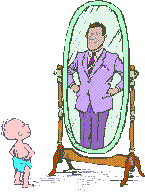
According to Wikipedia perception is the process of attaining awareness or understanding of sensory information. Passive perception can be surmised as the following sequence of events: surrounding → input (senses) → processing (brain) → output (re-action).
Perception in consumer behaviour depends on the level of attention one gives it. For example, if you were looking to buy a child a present for Christmas you would pay more attention or “tune in” to advertisements surrounding children’s toys. Perception is a personal thing, for example - a road is thick with fog and there is something up ahead that looks to you like a small dog but looks to your passenger like a small cat. Either one of you could be right and both will create arguments to try and convince the other that their perception is the correct one.
Another good example is the optical illusion as this demonstrates how different people perceive things. In the picture above, there is both a scene and a face, but depending on the person looking at it, some will see the face first and some will see the scene first. Some will only be able to see one of the two and will not be able to look at it from the other perspective.
Face or scene?
Steps in consumer in consumer decsison making model:
- Need for recognition
- Search for information
- Alternatives
- Evaluation
- Purchase
- Post purchase evaluation
Three important models that explain consumer decision making:
- Howard-Sheth Model of Buying Behaviour
- The Nicosia Model
- The Engel-Blackwell-Miniard Model
The Howard-Sheth Model of Buying Behaviour:
In the Howard-Sheth theory, the most significant stimulus affecting the buying behaviour are the information cues about the characteristics of the product. The product characteristics acting as information cues are quality, price, distinctiveness, service and availailibility. Perceptual constructs refer to all the complex states or psychological processes and how the individual deals with the information cues received. Although the individual may be engaged in a search for information they may sometimes be overwhelmed with unwanted information. Any information cues to the individual may be distoreted by their own frame of reference.
Perception: sensation --> attention --> interpretation.
Subscribe to:
Posts (Atom)